

Artificial intelligence chatbots have fundamentally transformed how businesses interact with customers, moving far beyond simple scripted responses to deliver intelligent, context-aware conversations. Unlike traditional chatbots that rely on pre programmed responses, ai chatbots leverage machine learning and natural language processing to understand context, learn from user interactions, and generate human like responses that feel authentic and helpful. At their core, a chatbot is essentially a computer program designed to simulate human conversation.
The global ai chatbot market has experienced explosive growth, reaching $2.9 billion in 2023 and projected to hit $9.4 billion by 2030. This surge reflects businesses recognizing that ai powered chatbots offer more than just cost savings—they provide 24/7 customer support, instant response times, and the ability to handle complex queries that would previously require human agents.
This comprehensive guide explores everything you need to know about artificial intelligence chatbots, from their core technologies and implementation strategies to the best ai chatbots available today and future trends shaping conversational ai. Only a basic understanding of AI is needed to start leveraging AI chatbots, so you don’t need advanced expertise to get started.
What Are Artificial Intelligence Chatbots
Artificial intelligence chatbots are sophisticated software applications that use artificial intelligence, natural language processing nlp, and machine learning to simulate human conversation. These ai tools represent a significant evolution from traditional chatbots, which relied on simple keyword matching and predefined responses. Modern chatbots utilize advanced AI, natural language processing, and machine learning to generate conversational responses that are more natural and adaptive than the scripted replies of earlier systems.
The key difference lies in their ability to understand context, extract meaning from natural language, and generate dynamic responses rather than following pre-scripted decision trees. Modern ai chatbots leverage large language models trained on vast amounts of conversational data to produce human like conversations that adapt to each user’s specific needs and communication style.

Core technologies powering artificial intelligence chatbots include:
- Large Language Models (LLMs): Advanced ai models like GPT-4, Claude 3, and Gemini that generate human language responses
- Natural Language Understanding (NLU): Technology that extracts intent and entities from user input
- Conversational AI: Systems that manage dialogue flow and maintain conversation context
- Machine Learning: Algorithms that enable continuous improvement from customer conversations
Additionally, ai chat features enable personalized and automated interactions, allowing businesses to streamline workflows and integrate chatbots with other applications.
Real-world examples of leading ai chatbots include ChatGPT by OpenAI, Claude by Anthropic, Google Gemini, Microsoft Copilot, and Meta AI. These platforms demonstrate how generative ai chatbots can handle everything from customer inquiries to complex problem-solving tasks. Generative AI chatbots can answer questions across a wide range of topics without relying on pre-programmed answers, providing support and information dynamically.
How AI Chatbots Work
AI chatbots work through a sophisticated combination of natural language processing, machine learning, and conversational ai technologies that enable them to understand user input, process context, and generate appropriate responses. The process begins when a user submits a query through various channels like messaging apps, mobile apps, or web interfaces.
Natural language processing serves as the foundation for how ai chatbots interpret user requests. When a user types or speaks a message, the nlp engine analyzes the user’s query to identify the user’s intent, extract relevant entities, and understand the conversational context. This goes far beyond simple keyword matching used by rule based chatbots.
Large language models like GPT-4 and Claude 3 form the core intelligence of modern ai chatbots. These ai models have been trained on billions of conversations and text data, enabling them to generate human language responses that feel natural and contextually appropriate. The models can understand nuanced queries, maintain conversation history, and adapt their communication style to match user preferences.
Machine learning algorithms continuously improve ai chatbot performance by analyzing customer queries, customer interactions, and feedback. Analyzing customer queries helps improve chatbot accuracy and user experience. Unlike traditional chatbots that remain static, ai powered chatbots learn from each conversation to provide better responses over time. This learning capability extends to understanding industry-specific terminology, user preferences, and optimal response patterns.
Integration capabilities allow ai chatbots to connect with knowledge bases, customer relationship management systems, and external APIs. This seamless integration means chatbots can access real-time information, update customer records, and perform complex tasks beyond simple question answering.
Key Technologies Behind AI Chatbots
Several advanced technologies work together to create the sophisticated capabilities of modern ai chatbots:
Retrieval Augmented Generation (RAG) combines the power of large language models with access to external knowledge sources and documents. This technology allows ai chatbots to provide accurate, up-to-date information by retrieving relevant data from knowledge bases before generating responses.
Deep learning neural networks trained on massive datasets enable ai chatbots to understand context, recognize patterns, and generate coherent responses across multiple conversations. These networks can process both structured and unstructured data to provide comprehensive support. Virtual agents represent an advanced form of AI chatbots, capable of handling complex tasks and integrating with automation technologies such as RPA.
Sentiment analysis capabilities help ai chatbots understand the emotional context behind user messages. This technology enables more empathetic responses and can escalate conversations to human agents when users express frustration or complex emotional needs.
Multi-modal capabilities are increasingly common in advanced ai chatbots, combining text, voice, and image processing. This allows users to interact through their preferred communication method and enables ai chatbots to handle more diverse customer inquiries. An ai agent can autonomously perform tasks across platforms, enhancing productivity and automation.
Types of AI Chatbots
Understanding the different types of ai chatbots helps businesses choose the right solution for their specific needs and use cases. Each type offers distinct advantages depending on the complexity of required interactions and available resources.
Generative ai chatbots create original responses using large language models like GPT-4, Claude 3, and Gemini. These ai chatbots excel at handling open-ended conversations, providing creative assistance, and adapting to unexpected user requests. They represent the most advanced form of conversational ai currently available.
Retrieval-based ai chatbots select the best responses from pre-existing databases using ai ranking algorithms. While they don’t generate entirely new content, they use machine learning to match user queries with the most appropriate pre-written responses, offering reliability for common customer inquiries.
Hybrid ai chatbots combine generative and retrieval approaches for optimal performance. These systems use rule-based responses for critical business processes while leveraging generative ai for more complex or creative interactions. This approach balances reliability with flexibility.
The distinction between domain-specific and general-purpose ai chatbots is crucial for implementation success. Domain-specific chatbots are trained on industry-specific data and terminology, making them highly effective for specialized use cases like healthcare symptom checking or financial services. General-purpose chatbots offer broader capabilities but may lack the depth needed for specialized applications. Creating your own chatbot allows businesses to deliver personalized customer interactions, tailored recommendations, and branded experiences that improve user engagement.
Voice-enabled ai chatbots incorporate speech recognition and text-to-speech capabilities, allowing for natural voice interactions. These chatbots are particularly valuable for accessibility, hands-free operations, and creating more engaging customer experiences across various touchpoints.
Selecting good ai chatbot software is essential to ensure seamless integration, adaptability, and customization to meet your business needs.
Key Benefits of AI Chatbots
The business benefits of implementing artificial intelligence chatbots extend far beyond simple cost reduction, though the financial impact is substantial. Organizations deploying ai chatbots report up to 30% reduction in operational costs while simultaneously improving customer satisfaction and engagement rates.
24/7 customer support availability represents one of the most significant advantages of ai chatbots. Unlike human agents who require breaks, shifts, and time off, ai powered chatbots provide consistent support around the clock. This continuous availability is particularly valuable for businesses serving global markets across different time zones.
Instant response times dramatically improve customer experiences compared to traditional support channels. While customers might wait minutes or hours for human agent responses, ai chatbots provide immediate acknowledgment and assistance. Leveraging natural language understanding, modern ai chatbots move the conversation forward more effectively than traditional systems that relied solely on keyword prompts. This speed often translates to higher customer satisfaction scores and reduced abandonment rates.
Scalability allows ai chatbots to handle thousands of simultaneous conversations without requiring additional staffing. During peak periods, product launches, or crisis situations, ai chatbots maintain consistent service levels while human agents focus on complex issues requiring personal attention.
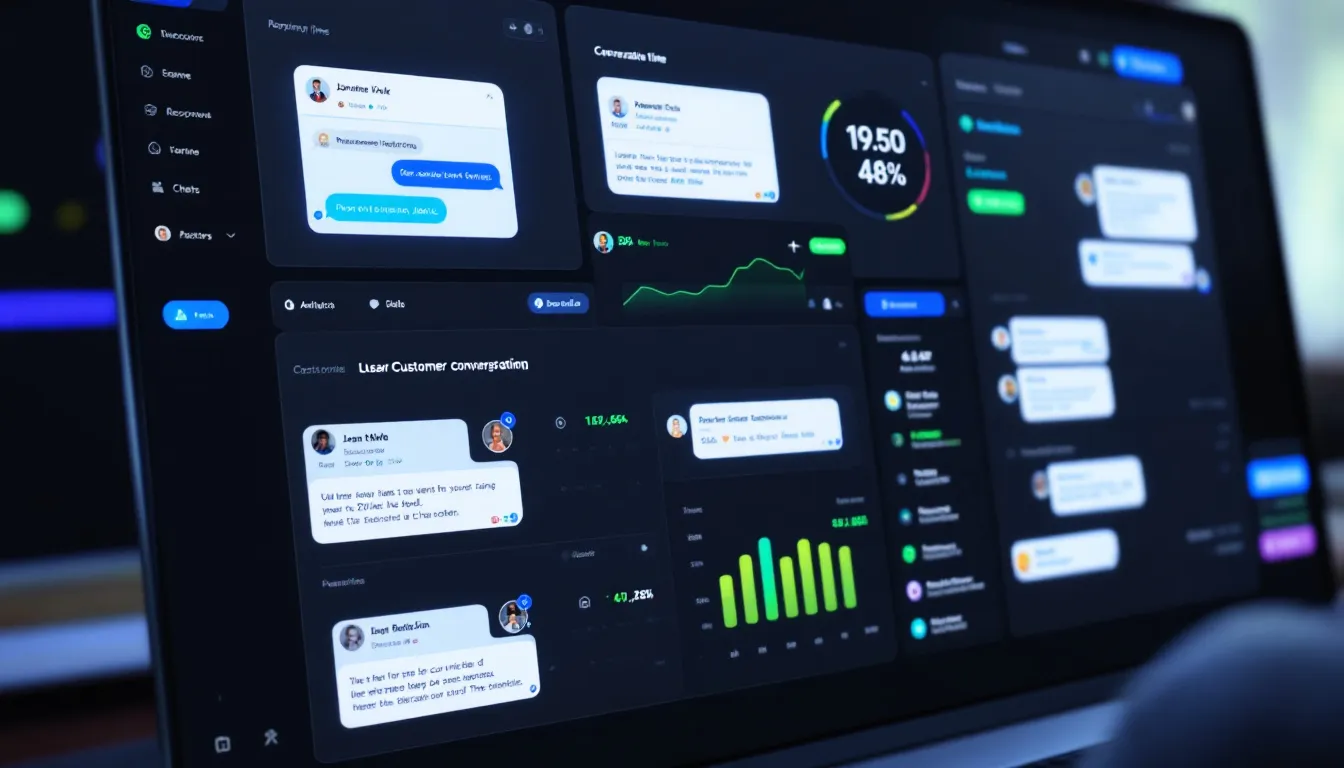
Personalized interactions based on user history, preferences, and behavioral patterns set modern ai chatbots apart from traditional automated systems. By analyzing past customer conversations and integrating with customer databases, ai chatbots can provide tailored recommendations, remember previous issues, and maintain continuity across multiple touchpoints. AI chatbots also assist users by guiding them through onboarding, answering questions, and collecting feedback to improve the overall user experience.
Multilingual support capabilities enable businesses to serve global customer bases without hiring multilingual staff. Advanced ai chatbots can switch between languages within conversations and understand cultural nuances, making them valuable for international expansion.
Data collection and analytics provide valuable insights into customer behavior, common issues, and optimization opportunities. Every customer interaction generates data that businesses can analyze to improve products, services, and support processes.
Common Use Cases and Applications
Artificial intelligence chatbots have proven valuable across numerous industries and business functions, with applications ranging from basic customer service automation to complex problem-solving assistance. Understanding these use cases helps organizations identify where ai chatbots can provide the most value.
Customer service automation remains the most common application for ai chatbots. In contact centers, these systems streamline communication workflows and improve operational efficiency by handling frequently asked questions, troubleshooting common issues, and guiding customers through standard processes like order tracking or account management. Routine inquiries are managed by ai chatbots, while more complex issues are automatically escalated to a customer service agent, ensuring a seamless customer experience. Advanced ai chatbots can resolve up to 70% of customer inquiries without human intervention, freeing customer service agents to focus on complex issues requiring empathy and creative problem-solving.
E-commerce assistance has evolved significantly with ai powered chatbots that provide personalized product recommendations based on browsing history, purchase patterns, and stated preferences. These chatbots guide customers through the purchase process, answer product questions, and even handle post-purchase support including returns and exchanges. Facebook Messenger is also widely used as a platform for deploying ai chatbots to enhance customer engagement and automate e-commerce tasks.
Lead generation and sales applications leverage ai chatbots to qualify prospects, schedule appointments, and nurture potential customers through automated conversations. By engaging website visitors immediately and asking qualifying questions, ai chatbots can identify high-value prospects and route them to appropriate sales representatives.
Educational support represents a growing application area where ai chatbots serve as tutoring assistants, provide course information, and offer personalized learning paths. These systems can adapt to individual learning styles, track progress, and provide 24/7 academic support for students across various subjects and skill levels.
Healthcare applications include symptom checking, appointment scheduling, medication reminders, and basic health information. While ai chatbots cannot replace medical professionals, they can triage patient inquiries, provide educational resources, and streamline administrative processes in healthcare settings.
Internal business operations benefit from ai chatbots handling HR queries, IT support tickets, and employee onboarding processes. When deploying chatbots for internal use, it is crucial to address security threats by implementing data encryption, access controls, and other security measures to protect sensitive company information. These applications reduce administrative burden on internal teams while providing employees with instant access to company information and support.
Content creation assistance leverages generative ai chatbots to help with writing tasks, social media posts, marketing copy, and creative brainstorming. These applications demonstrate how ai technology can augment human creativity rather than simply replacing routine tasks.
AI Chatbots vs Traditional Rule-Based Chatbots
The fundamental differences between ai chatbots and traditional rule based chatbots illustrate why businesses are rapidly adopting artificial intelligence solutions. Understanding these distinctions helps organizations make informed decisions about their conversational technology investments.
Response flexibility represents the most obvious difference between these approaches. Traditional chatbots rely on pre programmed responses triggered by specific keywords or phrases, creating rigid interactions that break down when users ask unexpected questions. Ai chatbots generate dynamic responses based on context, conversation history, and learned patterns, enabling more natural and helpful interactions.
Learning capability sets ai chatbots apart from their rule-based predecessors. While traditional chatbots remain static unless manually updated, ai powered chatbots continuously improve through machine learning algorithms that analyze successful interactions and user feedback. This ongoing learning process means ai chatbots become more effective over time without requiring constant manual programming.
Context understanding allows ai chatbots to maintain conversation history and understand nuanced queries that reference previous messages or implied information. Traditional chatbots typically treat each message as an isolated event, unable to maintain meaningful context across longer conversations.
| Feature | Traditional Chatbots | AI Chatbots |
|---|---|---|
| Response Generation | Pre-scripted answers | Dynamic, contextual responses |
| Learning Ability | Static, manual updates | Continuous improvement |
| Context Awareness | Limited to single queries | Full conversation history |
| Implementation | Manual rule programming | Training data and fine-tuning |
| Maintenance | High ongoing effort | Lower long-term maintenance |
| Initial Cost | Lower setup costs | Higher initial investment |
| Scalability | Limited by rule complexity | Scales with training data |
Implementation complexity differs significantly between these approaches. Traditional chatbots require extensive manual programming of decision trees and response scripts, while ai chatbots need training data and proper configuration but less hands-on rule creation. However, ai chatbots require more sophisticated technical infrastructure and ongoing monitoring.
Cost considerations favor different approaches depending on use case complexity and timeline. Traditional chatbots have lower initial setup costs but require significant ongoing maintenance as business needs evolve. Ai chatbots involve higher upfront investments but typically require less manual maintenance over time.
Use case suitability determines which approach works best for specific applications. Rule based chatbots excel at simple, predictable interactions like basic FAQs or straightforward process automation. Ai chatbots are better suited for complex, varied conversations that require understanding context, handling ambiguity, and providing personalized responses. Some platforms incorporate both AI chatbots and rule-based chatbots to leverage the strengths of each approach, offering greater versatility for a wide range of customer service scenarios.
Popular AI Chatbot Platforms and Tools
The ai chatbot platform landscape offers numerous solutions ranging from consumer-focused tools to enterprise-grade systems. Understanding the capabilities and positioning of major platforms helps organizations select the best ai chatbot for their specific needs and technical requirements.
OpenAI ChatGPT represents the most recognizable consumer ai chatbot, powered by GPT-4 and the newer o1 models with advanced reasoning capabilities. The platform integrates DALL-E 3 for image generation and offers API access for developers building custom applications. ChatGPT Plus provides access to the latest models and increased usage limits for business applications.
Anthropic Claude offers Haiku, Sonnet, and Opus models with industry-leading context windows supporting up to 150,000 words. This extensive context capability makes Claude particularly valuable for applications requiring deep document analysis or long-form conversations. The platform emphasizes safety and alignment, making it suitable for enterprise deployments requiring reliable, consistent responses.
Google Gemini provides deep integration with Google Workspace applications and real-time web data access. This connectivity allows Gemini to provide current information and seamlessly integrate with existing Google-based workflows. The platform offers multiple model sizes optimized for different use cases and computational requirements.
Microsoft Copilot builds on OpenAI models while offering tight integration with Office 365 applications. This positioning makes Copilot particularly valuable for organizations already invested in Microsoft’s ecosystem, providing ai assistance directly within familiar business applications.

Enterprise platforms provide comprehensive ai chatbot development and deployment capabilities:
- Dialogflow CX offers Google’s enterprise conversational ai platform with advanced flow management and integration capabilities
- Microsoft Bot Framework provides tools for building sophisticated chatbots with multi-channel deployment
- IBM Watson Assistant delivers enterprise-grade conversational ai with industry-specific pre-built solutions
Custom development tools enable organizations to build tailored ai chatbot solutions:
- Hugging Face Transformers provides access to numerous open-source language models and development tools
- OpenAI API allows developers to integrate GPT models into custom applications
- Anthropic API offers programmatic access to Claude models for enterprise applications
Specialized AI Chatbot Solutions
Different industries and use cases benefit from specialized ai chatbot solutions designed for specific applications and compliance requirements.
Customer support platforms like Intercom Fin, Ada, and Zendesk Answer Bot integrate ai capabilities with existing helpdesk systems. These solutions understand support ticket context, access customer history, and can escalate complex issues to human agents with full conversation context.
Sales and marketing focused solutions including HubSpot Breeze, Salesforce Einstein, and Drift Conversational AI integrate with CRM systems to qualify leads, nurture prospects, and support sales processes. These platforms understand sales pipeline stages and can provide personalized outreach based on customer behavior.
Development and coding assistance tools like GitHub Copilot, Amazon Q Developer, and Tabnine help programmers write code, debug issues, and learn new technologies. These specialized ai chatbots understand programming languages, frameworks, and development best practices.
Education platforms such as Khan Academy Khanmigo and various ai tutoring systems provide personalized learning assistance, homework help, and adaptive curriculum guidance. These tools understand pedagogical principles and can adjust their teaching approach based on individual student needs.
Tech Stack and Infrastructure for AI Chatbots
A robust tech stack is the backbone of any successful AI chatbot, directly impacting its ability to deliver fast, accurate, and human-like responses at scale. The right combination of technologies ensures that AI chatbots can process vast amounts of conversational data, leverage advanced AI models, and integrate seamlessly with existing systems to provide a smooth user experience.
At the core of the AI chatbot tech stack are natural language processing (NLP) libraries, which enable the chatbot to interpret and understand natural language input from users. Popular NLP libraries such as NLTK, spaCy, and Stanford CoreNLP provide essential tools for tokenization, entity recognition, and sentiment analysis, forming the foundation for natural language processing nlp capabilities.
Machine learning frameworks like TensorFlow, PyTorch, and Scikit-learn are used to train, fine-tune, and deploy AI models that power the chatbot’s intelligence. These frameworks allow developers to build sophisticated AI chatbots that can learn from user interactions, adapt to new conversational patterns, and generate human like responses that feel natural and engaging.
Cloud-based infrastructure is another critical component, offering the scalability and flexibility needed to support AI chatbots in production environments. Leading providers such as Amazon Web Services (AWS), Microsoft Azure, and Google Cloud Platform (GCP) offer a suite of services—including compute power, storage, and networking—that enable AI chatbots to handle large volumes of user requests and integrate with other business applications. This cloud infrastructure also supports seamless updates and maintenance, ensuring that AI chatbots remain responsive and reliable as business needs evolve.
By carefully selecting and integrating these technologies, organizations can build AI chatbots that not only deliver exceptional conversational experiences but also scale effortlessly to meet growing demand and changing business requirements.
Knowledge Base and Content Management in AI Chatbots
The knowledge base is the heart of any effective AI chatbot, serving as the primary source of information for generating accurate and relevant responses to user queries. A well-structured knowledge base empowers the AI model to deliver human like responses, ensuring that users receive helpful and contextually appropriate answers.
Building and maintaining a comprehensive knowledge base involves several key processes. Data ingestion is the first step, where information is collected from a variety of sources such as text documents, websites, databases, and even previous customer interactions. This ensures that the AI chatbot has access to a vast amount of up-to-date and diverse content.
Once the data is gathered, data processing transforms raw information into a structured format that the AI model can understand and utilize. This may include cleaning the data, extracting key concepts, and organizing information into categories or knowledge graphs. Effective data processing is essential for enabling the AI chatbot to quickly retrieve relevant information and generate responses that align with the user’s query.
Data storage is the final component, where the processed information is securely stored in databases or knowledge graphs. This allows the AI chatbot to access the knowledge base in real time, supporting fast and accurate responses during user interactions. Ongoing content management is crucial to keep the knowledge base current, accurate, and aligned with evolving business needs and user expectations.
By investing in robust knowledge base management, organizations ensure that their AI chatbots remain reliable, informative, and capable of handling a wide range of customer inquiries with confidence.
Implementation Best Practices
Successful ai chatbot implementation requires careful planning, clear objectives, and ongoing optimization to ensure the technology delivers expected business value. Organizations that follow proven best practices are more likely to achieve positive outcomes and user adoption.
Define clear objectives and success metrics before beginning implementation. Specific goals might include reducing support ticket volume by a certain percentage, improving response times, or increasing customer satisfaction scores. Measurable objectives enable teams to track progress and demonstrate return on investment.
Choose platforms with strong integration capabilities for existing tech stacks. The best ai chatbot solutions seamlessly connect with customer relationship management systems, knowledge bases, existing systems, and other business applications. This integration ensures ai chatbots can access necessary information and update relevant records during customer interactions.
Implement proper fallback mechanisms to human agents for complex queries that exceed ai chatbot capabilities. Effective escalation processes maintain customer satisfaction when ai technology reaches its limits. The handoff should include full conversation context and clear explanation of the customer’s needs.
Regular training and fine-tuning using actual conversational data and customer feedback improves ai chatbot performance over time. This includes analyzing failed interactions, updating knowledge bases, and adjusting response patterns based on successful conversations. Continuous improvement ensures the ai chatbot stays effective as business needs evolve.
Ensure compliance with data privacy regulations like GDPR and CCPA throughout the implementation process. This includes secure data handling, clear privacy policies, and user consent mechanisms. Organizations must also consider data retention policies and deletion procedures for sensitive customer information.
Design conversational flows that feel natural and maintain user engagement throughout interactions. This involves creating personality-appropriate responses, using conversational language, and avoiding overly technical jargon. The chat experience should feel helpful and human-like rather than robotic or frustrating.
Monitor performance metrics including response accuracy, user satisfaction scores, resolution rates, and conversation completion percentages. Regular analysis of these metrics identifies optimization opportunities and ensures the ai chatbot continues meeting business objectives.
Challenges and Limitations
While artificial intelligence chatbots offer significant benefits, organizations must understand and address several challenges and limitations to ensure successful implementation and user adoption.
Hallucinations represent a significant concern where ai chatbots may generate inaccurate or completely fabricated information while presenting it confidently. This issue requires careful monitoring, fact-checking mechanisms, and clear disclaimers about the limitations of ai-generated responses. Organizations implementing ai chatbots for critical applications must establish verification processes.
Data privacy concerns arise from the vast amounts of conversational data that ai chatbots collect and process. Sensitive customer information may be exposed or misused if proper security measures aren’t implemented. Organizations must establish clear data handling policies, encryption standards, and access controls to protect customer privacy.
Context limitations become apparent in very long conversations where ai chatbots may lose track of earlier discussion points or fail to maintain consistency across extended interactions. While modern ai models have improved context windows, they still have practical limits that affect their ability to handle complex, multi-session conversations.
Bias in responses reflects biases present in training data, potentially leading to unfair or inappropriate responses for certain user groups. This challenge requires diverse training data, bias testing, and ongoing monitoring to ensure ai chatbots provide equitable service to all users.

Integration complexity challenges arise when connecting ai chatbots with legacy systems, databases, and complex business workflows. Older systems may lack APIs or data formats compatible with modern ai chatbot platforms, requiring significant technical work to achieve seamless integration.
Cost considerations include not only initial implementation expenses but ongoing computational costs for advanced ai models. Organizations must budget for model usage fees, infrastructure costs, and potential scaling expenses as adoption grows.
User trust and acceptance barriers exist as some customers prefer human interaction or remain skeptical about ai-generated responses. Overcoming these concerns requires transparent communication about ai capabilities, clear identification of ai interactions, and easy escalation paths to human agents.
Future Trends in AI Chatbots
The future of artificial intelligence chatbots promises significant advances in capability, sophistication, and integration with broader business processes. Understanding emerging trends helps organizations prepare for the next generation of conversational ai technology.
Reasoning models like DeepSeek R1 and OpenAI o3 represent a major evolution toward step-by-step problem solving and logical analysis. These advanced ai models can break down complex problems, show their reasoning process, and provide more reliable solutions for intricate business challenges. This capability moves ai chatbots beyond simple question-answering toward genuine problem-solving assistance.
Multimodal capabilities combining text, voice, images, and video processing will create more natural and versatile user interactions. Future ai chatbots will seamlessly switch between communication modes, analyze visual content, and provide richer responses that incorporate multiple types of media. This evolution supports more inclusive accessibility and diverse user preferences.
AI agents with autonomous task execution and workflow automation represent perhaps the most transformative trend. These systems will move beyond conversation toward actually performing complex tasks like booking appointments, processing transactions, and managing business workflows with minimal human oversight. This agentic approach transforms ai chatbots from reactive assistants to proactive business tools.
Advanced personalization using behavioral analysis and predictive modeling will enable ai chatbots to anticipate user needs and provide increasingly relevant assistance. By analyzing patterns in customer interactions, purchase history, and stated preferences, these systems will offer truly personalized experiences that adapt to individual communication styles and business needs.
Industry-specific ai chatbots with specialized domain knowledge will become more prevalent as organizations recognize the value of targeted solutions. These systems will understand industry terminology, regulatory requirements, and specific business processes, providing more accurate and valuable assistance than general-purpose alternatives.
Integration with AR/VR environments will create immersive conversational experiences that blend digital and physical interactions. This technology will be particularly valuable for training applications, remote assistance, and complex product demonstrations where visual context enhances communication effectiveness.
Improved emotional intelligence and empathy in ai responses will make conversations feel more natural and supportive. Advanced sentiment analysis and emotional understanding will help ai chatbots respond appropriately to frustrated customers, celebrate successes, and provide emotional support when needed.
The convergence of these trends suggests that artificial intelligence chatbots will evolve from simple customer service tools into comprehensive digital assistants capable of handling complex business processes, creative tasks, and meaningful relationship building. Organizations that begin experimenting with advanced ai chatbot capabilities today will be better positioned to leverage these emerging technologies as they mature.
As we look toward the future, the question isn’t whether ai chatbots will transform business operations, but how quickly organizations can adapt their strategies to leverage these powerful tools effectively. The businesses that succeed will be those that view ai chatbots not as simple automation tools, but as strategic assets capable of enhancing customer experiences, improving operational efficiency, and driving innovation across all aspects of their operations.
Conclusion
In conclusion, AI chatbots have fundamentally changed the landscape of customer engagement, offering businesses the ability to provide 24/7 support, personalized interactions, and instant answers to even the most complex queries. The best AI chatbots leverage a powerful combination of generative AI, machine learning, and natural language processing nlp to deliver human like responses that enhance the customer experience.
To maximize the benefits of AI chatbots, it is essential to invest in the right tech stack and infrastructure, ensuring that your chatbot can process natural language efficiently and scale with your business. Equally important is the development of a comprehensive knowledge base and effective content management strategies, which empower the AI model to deliver accurate and relevant responses to every user query.
As AI technology continues to advance, we can expect AI chatbots to become even more sophisticated—capable of understanding nuanced language, handling increasingly complex queries, and providing deeply personalized recommendations. Whether you are looking to improve customer support, automate repetitive tasks, or drive customer engagement, AI chatbots represent a powerful tool for achieving your business goals.
By embracing the latest advancements in AI chatbot software and focusing on seamless integration, robust knowledge management, and ongoing optimization, organizations can unlock new levels of efficiency, loyalty, and revenue growth. The future of customer interactions is here—and with the right approach, AI chatbots can become a strategic asset that sets your business apart.